Escape the Catacombs
Virtual reality has always interested me because of its potential in making immersive experiences for more than just entertainment. My original idea was to experiment with how it could be incorporated into schools as a more effective teaching method, however, Covid-19 made this impossible.
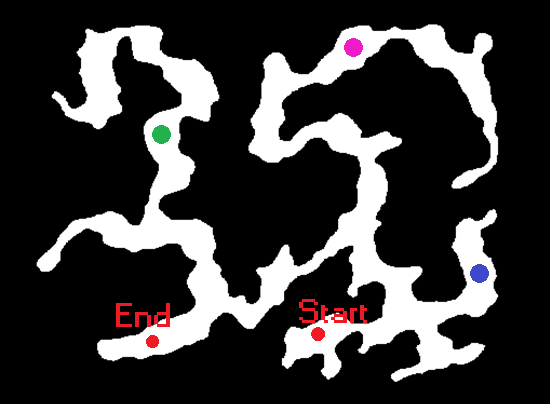
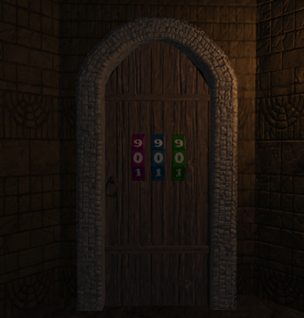
Instead, I aimed to explore how audio and visuals affect spatial awareness in a complex environment. In this case, the complex environment was a labyrinth designed to look like catacombs. The player was tasked to escape through the door by figuring out the 3-digit code from cues hidden around the labyrinth.
The first level consisted of types of lighting and objects as landmarks. The second level was completely dark, requiring the player to navigate with sources of spatial audio. The third level combined both lighting and audio which overwhelmed many players but solidified strong associations in their minds. By using different combinations for each level, I could observe which ones where the most effective.
My intention in using a labyrinth was to mimic an environment you would see in recent virtual reality games, which are getting more complex and harder to navigate. This was purposefully paired with extremely simple controls and a lack of GUI, so that they would be fully involved in the experience. I found that even though players felt lost, they still memorised the environment subconsciously. Also, the difference in performance between players who were experienced with games versus those who were not, was minimal, especially in the second level.
The main difference between them was that less experienced players didn’t turn their head as often, resulting in longer completion times on average. However, lighting and audio did encourage this behavior and proved to be most successful in the first level where the three coloured lit areas stood out from the rest of the labyrinth.